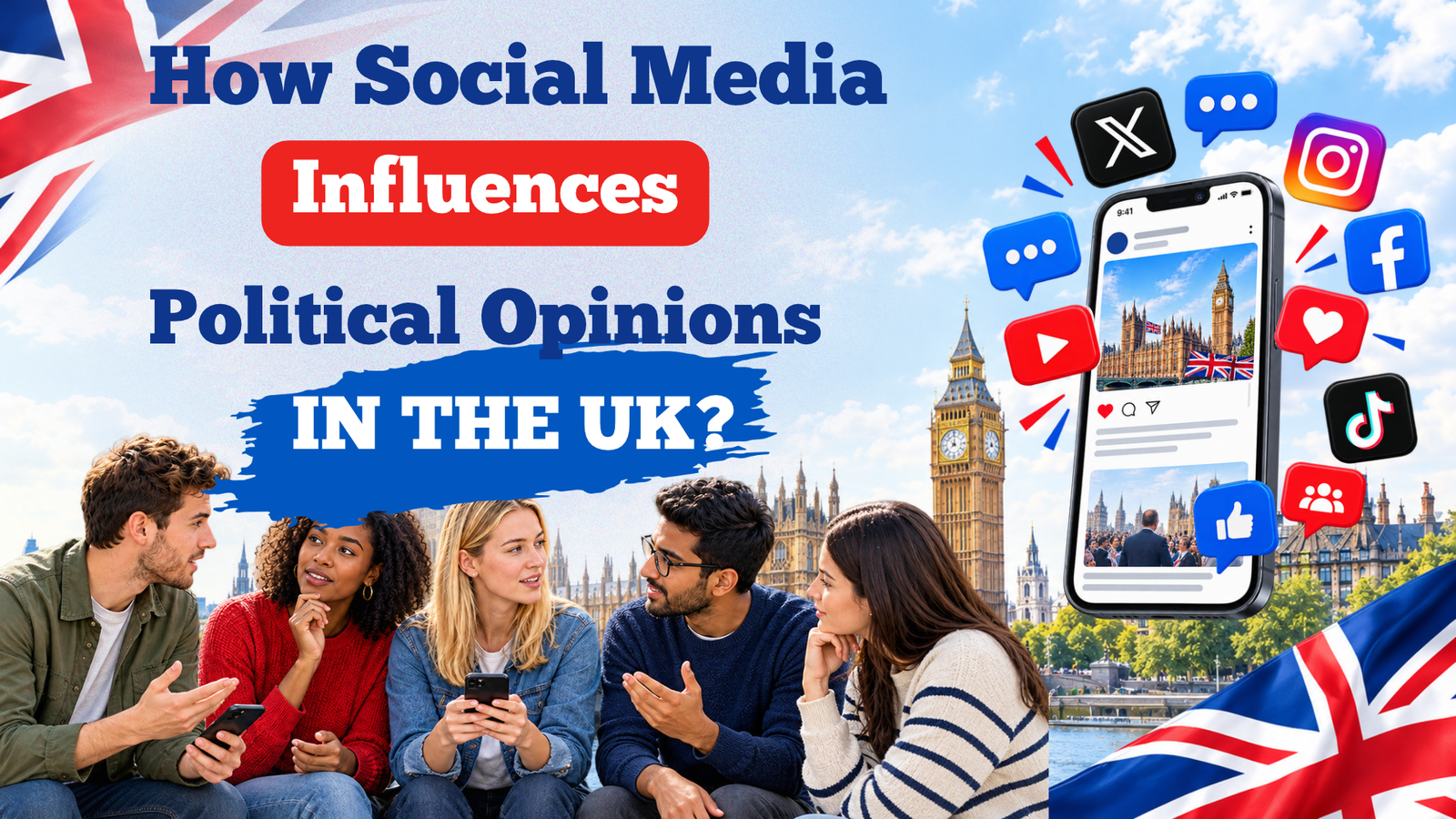
Social media shapes political opinions across the UK.
A political discussion starts with a short video, a piece of news is shared in thousands of feeds, a post on a government decision gets comments from people who otherwise may not have talked about politics. Social media has played a role in the UK in becoming a key source of political information, shaping perceptions of political issues, assessing leaders and shaping government opinion. That was once the case for political communication, which was dependent on newspapers and TV sets, but it is now possible to send political messages in seconds to an audience through platforms like Facebook, Instagram, TikTok, YouTube and X.
It has opened up fresh avenues for the public to engage with politics, to voice their opinions, to challenge political decisions, to comment on politics and issues affecting health, immigration, education and the economy. But online communication also poses challenges due to the speed and accessibility of the medium, misinformation, emotionally charged information and the dissemination of false political claims. Knowledge of the effect of social media on political opinion is thus crucial to an understanding of political discussion in the UK today.
How Social Media Is Influencing Political Discussions
Social media has brought politics beyond the confines of Parliament, news studios and election campaigns. Individuals can share personal experiences with audiences nationwide, respond to government announcements and exchange opinions with people across the country. Online communities and hashtags can help raise awareness of topics or problems, such as the cost of living, housing affordability, climate policy and public services, including topics that may not otherwise reach people who do not encounter them.
But social media sites use their recommendation algorithms to determine the content that will be recommended to users based on their interests and interactions. If someone regularly views content relating to a specific opinion, they might continue to see similar content, which could strengthen their existing views. While users are free to explore different perspectives, personalised feeds can influence which issues are addressed and how political events are understood.
The Influence of Online Communities on Political Campaigns
Social media is playing an increasing role in helping political parties and candidates in the UK reach voters directly. Politicians can explain policies, respond to criticism and deliver messages without being completely dependent on traditional media through campaign videos, livestreams, interviews and short posts. These platforms can also give political figures greater access to younger people and those who do not regularly follow newspapers or television news.
Civic participation can be promoted through online communities by facilitating discussions about common problems, helping people organise campaigns and raising awareness of public issues. However, carefully edited videos and emotionally charged messages can convey only a portion of a political argument. A user base largely composed of people who agree with one another can reduce the perceived credibility of opposing views and make constructive political debate more difficult.
How Misinformation Can Impact Trust in Politics and Political Institutions
A significant amount of information spreads rapidly and sometimes inaccurately on social media, influencing political opinions. Misleading information, such as false claims, manipulated images, misleading headlines and videos taken out of context, can spread widely before the truth becomes clear. This can affect people’s views of political candidates, government actions and national events, especially when they share content without verifying its source.
There is also a problem when authentic information is presented without the context necessary to understand it. Users should check original sources, verify the credibility of news reports and compare information from reputable news sources to develop informed political opinions and make better decisions. Just because something is popular on the internet does not make it true, and repeated exposure does not necessarily make a claim accurate. Responsible information sharing is therefore vital to public trust and high-quality political debate in the UK.
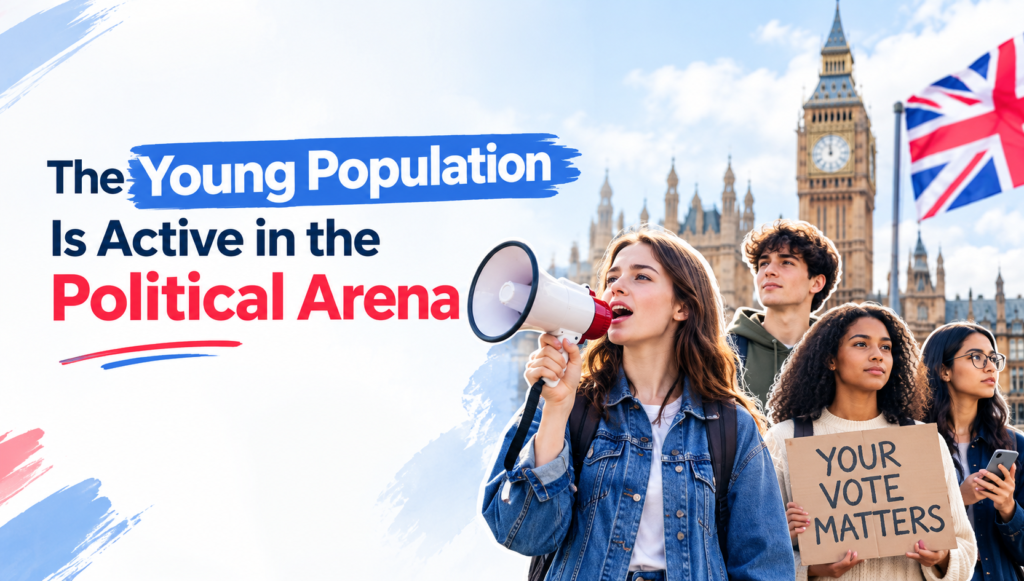
The Young Population Is Active in the Political Arena
Many young people encounter political information through social media. Short videos, social media explainers and discussions with content creators can introduce elections, government policies and social issues to those who do not generally follow the news. These platforms also enable students and first-time voters to ask questions, compare political positions and discuss issues that will affect their future.
Political activism can happen after an online reaction. Social media conversations can encourage people to contact representatives, sign petitions, attend public meetings, join peaceful demonstrations or register to vote. However, receiving political content is not the same as understanding it, and online popularity does not always translate into real political change. Social media can supplement trusted news, accurate information and diverse perspectives to help young voters make informed decisions.
A Window into the Future: The State of Political Opinion in the UK
In the UK, social media will probably continue to be a key part of political communication. Recommendation systems, video platforms and artificial intelligence could affect how campaign messages are developed and shared. Identifying fake images, audio and videos created using artificial intelligence (AI) is becoming increasingly important when determining the authenticity of political information before accepting or sharing it.
The influence of social media involves more than views, likes and shares. Politicians post messages, journalists explain events, creators interpret issues and platform algorithms decide what gets shown. These forces can help make politics more accessible, but they can also contribute to misinformation and polarisation. In the UK, people can use social media more responsibly and engage more thoughtfully in political life by questioning emotional claims, verifying sources and considering credible alternative viewpoints.