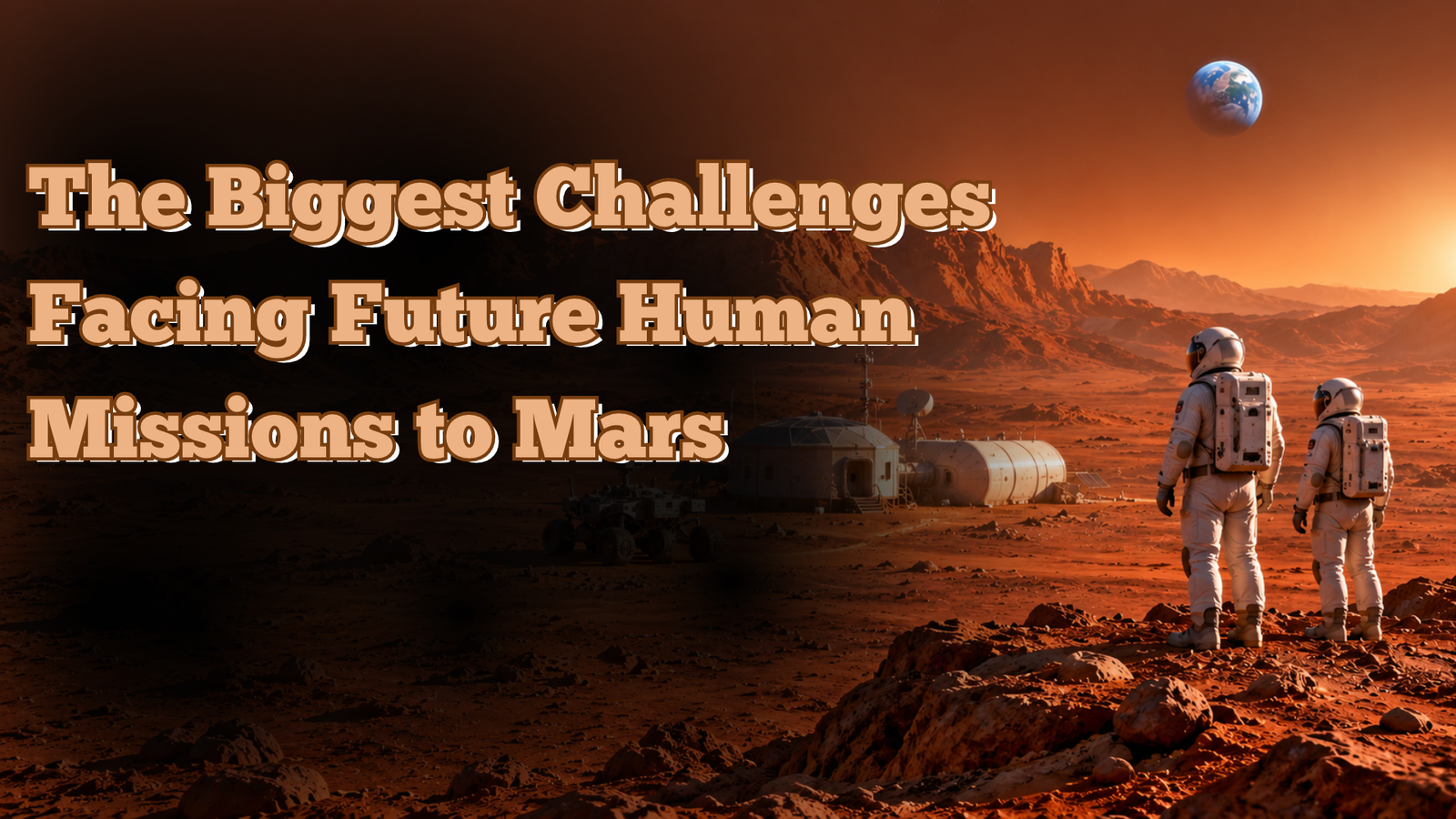
Reaching Mars Won’t Be Easy.
Mars has long captured the imagination of scientists and space enthusiasts. Its red surface, vast landscapes and potential to support microbial life make it one of the most fascinating destinations in space exploration. However, sending humans to the Red Planet is far more complicated than launching a spacecraft and landing on its surface.
A journey to Mars would expose astronauts to extreme conditions, limited resources and psychological pressure. From surviving dangerous radiation to developing reliable technologies for landing and returning home, every stage of the mission presents serious challenges. Overcoming these obstacles will be essential to making human exploration of Mars possible.
The Long Journey and Radiation Risks
Travelling to Mars is one of the first major challenges facing future astronauts. Depending on the spacecraft’s trajectory and the positions of Earth and Mars, a one-way journey typically takes around six to nine months. Astronauts would need to live in a confined spacecraft for an extended period, with limited privacy, supplies and opportunities to communicate with people on Earth. Unlike missions to the International Space Station, a Mars expedition would take astronauts much farther from Earth, making emergency supplies and immediate medical assistance difficult to access. Suitable launch opportunities also occur roughly every 26 months, requiring careful mission planning.
Radiation presents another serious threat during the journey. Earth’s magnetic field and atmosphere provide natural protection from much of the harmful radiation arriving from space. Outside this protective environment, astronauts face exposure to cosmic rays and energetic particles released by the Sun, which can damage cells and DNA and potentially increase the risk of cancer and other long-term health problems. Scientists are investigating improved shielding, radiation monitoring systems and protective habitats to reduce these risks. However, developing effective protection without adding excessive spacecraft weight remains a major engineering challenge.
Surviving the Harsh Environment of Mars
Mars is an extremely difficult environment for human life. Its atmosphere consists mainly of carbon dioxide, its air pressure is very low, and temperatures can fall far below freezing. Humans cannot survive on the planet without pressurised habitats, dependable life-support systems and continuous access to essential resources. Astronauts will need breathable oxygen, clean water, food and reliable energy. Transporting every supply from Earth would be expensive and could limit the duration of a mission, making resource production and recycling important priorities for researchers.
Scientists are exploring ways to produce oxygen, recover water and use local materials on Mars. Experiments have already demonstrated that oxygen can be produced from carbon dioxide under Martian conditions, offering a potential foundation for future human missions. However, oxygen production, water recycling and power systems must operate reliably for long periods, even when replacement parts and technical support are difficult to obtain. Developing dependable technologies will be essential for keeping astronauts safe during extended stays on the planet.
Psychological Challenges of Living Far from Earth
A Mars mission would test astronauts mentally as well as physically. Crew members could spend months travelling through space before living in a small habitat on an unfamiliar planet. Limited privacy, isolation and separation from family and friends could create considerable psychological pressure. Communication with Earth would also involve significant delays, as signals can take several minutes to travel in each direction depending on the positions of the planets. Real-time conversations and immediate guidance from mission control would therefore be impossible, requiring astronauts to solve many problems independently.
Selecting compatible crew members, providing psychological support and designing comfortable living spaces will be important for mission success. Astronauts will also need training to manage conflicts, handle emergencies and make decisions under pressure. Preparing for these challenges could help crews maintain their well-being throughout the long journey and their stay on Mars. Careful preparation will be particularly important when unexpected situations arise and immediate assistance from Earth is unavailable.
Landing on Mars and Returning Safely to Earth
Reaching Mars is only part of the challenge. Landing a large spacecraft safely on its surface is another major obstacle. The planet’s thin atmosphere creates difficulties because it generates heat during entry but cannot slow a heavy spacecraft as effectively as Earth’s atmosphere can. Future human missions will require advanced heat shields, parachutes, propulsion systems and precise landing technology. These systems must deliver astronauts, habitats, scientific equipment and supplies safely to the surface, as even a small technical failure could threaten the entire mission.
Returning home presents an equally complicated problem. A crewed mission would need sufficient fuel, a reliable launch system and a spacecraft capable of bringing astronauts safely back to Earth. Producing some of the necessary fuel on Mars could reduce the amount transported from Earth and make long-duration missions more practical. However, these technologies must be thoroughly tested before astronauts can depend on them. Planning both the landing and return journey in advance will be essential to ensuring crew safety.
The Cost and Technology Behind Future Mars Missions
Human exploration of Mars will require substantial financial investment and long-term cooperation between governments, scientists, engineers and private space companies. Developing spacecraft, life-support equipment, landing systems and surface habitats involves years of research and testing. Advances in robotics, artificial intelligence, autonomous navigation and energy systems could make future missions more practical. Robotic spacecraft can investigate landing sites, study environmental conditions and test equipment before astronauts arrive, while autonomous systems may help crews monitor life-support equipment and identify technical problems.
Reliable energy will be essential for habitats, communication systems and scientific instruments. Solar power is one option, although dust accumulation and seasonal conditions can reduce its effectiveness. Nuclear power systems could offer a more consistent energy supply for certain missions. International partnerships and commercial space companies may help share technical expertise, resources and costs. Nevertheless, all these technologies must work together reliably under extreme temperatures, radiation exposure and prolonged isolation, making extensive testing essential before human crews can safely depend on them.
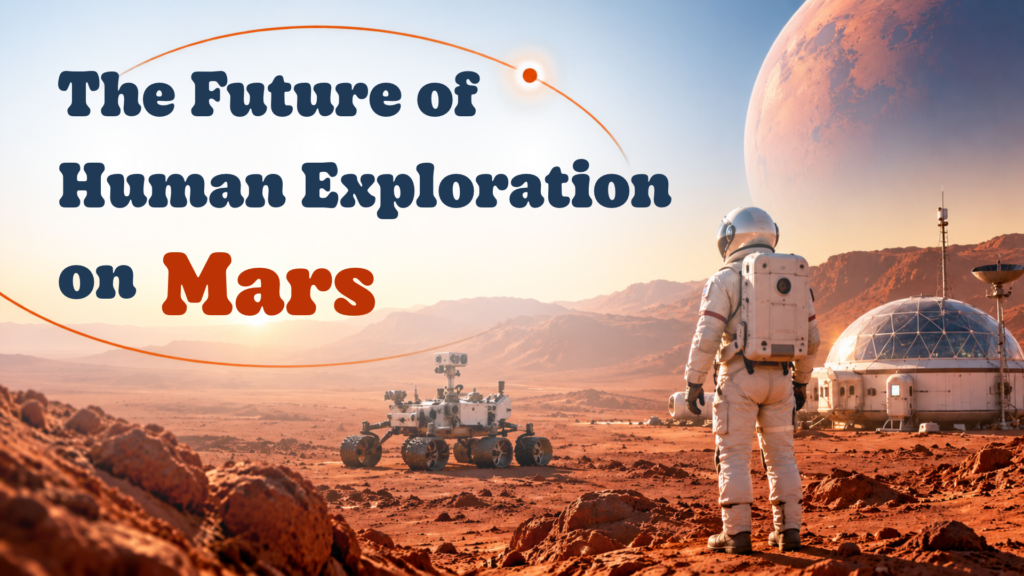
The Future of Human Exploration on Mars
The challenges of reaching Mars show why human space exploration requires more than ambition. Astronauts will need protection from radiation, dependable life-support systems, safe habitats and reliable transportation. They must also be prepared to manage isolation, respond to emergencies and make critical decisions without immediate assistance from Earth. Continued research and technological development are bringing scientists closer to understanding how humans might live and work on another planet, but progress will depend on careful planning, repeated testing and international cooperation.
Mars could become a major milestone in human exploration, creating new opportunities for scientific discovery and helping researchers understand whether humans can live beyond Earth. Although the journey remains difficult, overcoming these challenges could transform the future of space exploration. Every advancement in spacecraft design, resource management and astronaut safety will bring humanity closer to making crewed missions to the Red Planet a reality.