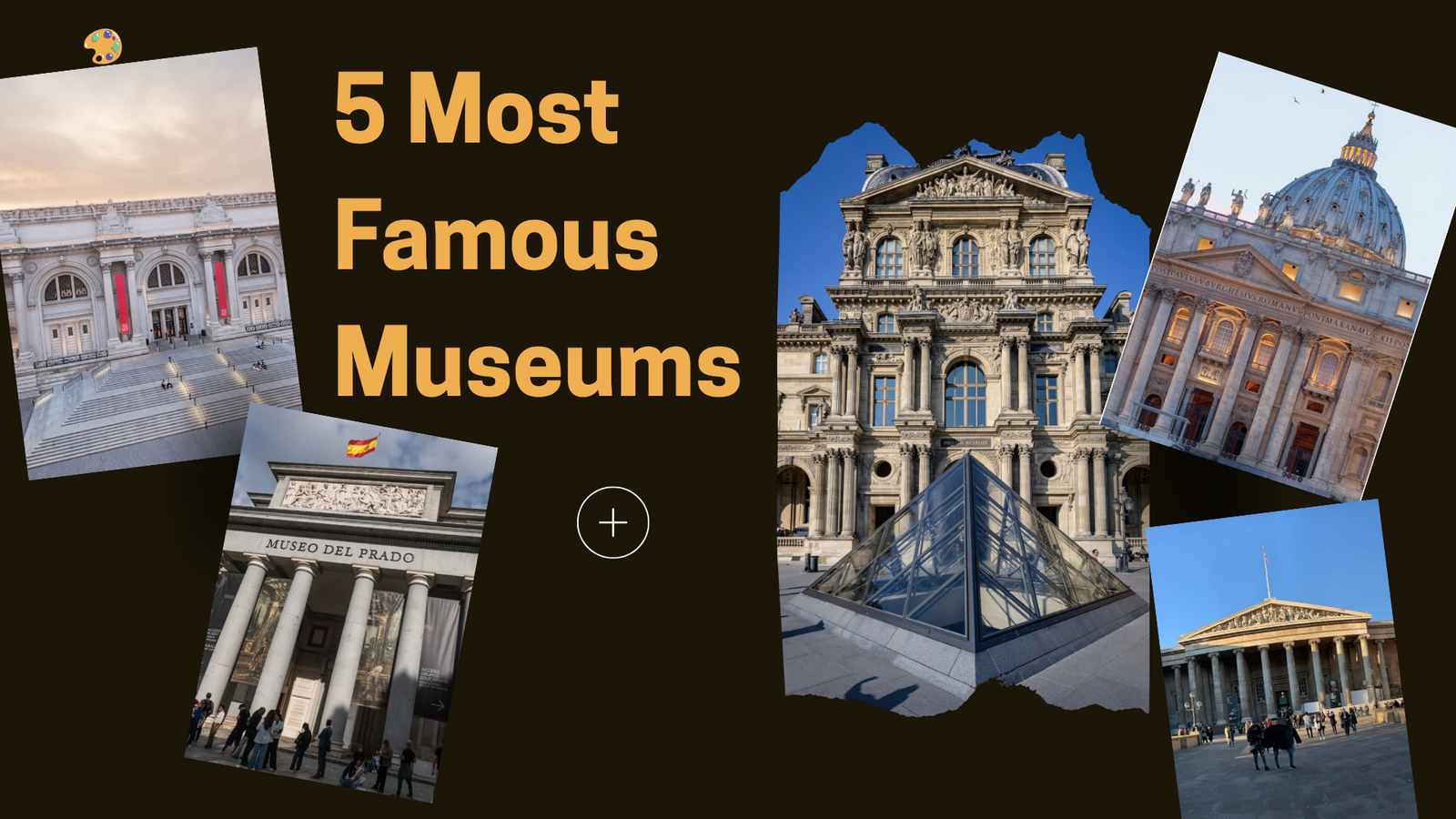
Explore the Masterpieces That Define Human History.
From the glass pyramid of Paris to the grand galleries of New York, discover five remarkable museums that bring humanity’s greatest stories, artworks and discoveries together.
Museums are more than buildings filled with objects behind glass. They are gateways into other worlds: places where ancient civilizations come alive, masterpieces reveal the ideas of their makers, and a single gallery can change how we see the past. For travelers, the world’s best-known museums offer a powerful way to understand the cultures that shaped our shared history.
Choosing just five is never easy, but these institutions stand out for the scale of their collections, their global influence and the unforgettable experience of visiting them. Whether you love painting, archaeology, architecture or simply the thrill of discovering something extraordinary, these stops deserve a place on your travel wish list.
Before you go
Major museums can have timed entry, special exhibition tickets and different opening hours by season. Check the official visitor information before traveling, and leave room in your schedule for the galleries that interest you most.
1. The Louvre — Paris, France
A world of art beneath a glass pyramid
The Louvre is one of the world’s most recognizable museums, set inside a former royal palace in the heart of Paris. Its vast collection spans ancient civilizations through European art, making the museum feel like a journey across time and continents.
Visitors come for celebrated works such as Leonardo da Vinci’s Mona Lisa and the ancient Greek sculpture Venus de Milo, but its quieter rooms and decorative arts are equally rewarding. The scale is immense, so choose a few priorities rather than trying to see everything in one visit.
2. The Vatican Museums — Vatican City
Centuries of masterpieces in one extraordinary complex
The Vatican Museums bring together collections assembled by generations of popes, including classical sculpture, tapestries, maps and Renaissance art. The route through the museums is itself part of the experience, with richly decorated rooms leading visitors toward one of the most famous artistic spaces in the world.
The Sistine Chapel, celebrated for Michelangelo’s ceiling and The Last Judgment, is a major highlight. Because the museums are popular and extensive, booking ahead and checking visitor rules can make the day smoother.
3. The British Museum — London, United Kingdom
Explore the stories of civilizations
The British Museum is renowned for its collection devoted to human history, art and culture. Its galleries take visitors from ancient Egypt and Assyria to Greece, Rome and many other regions, showing how societies traded ideas, built cities and expressed their beliefs.
Among its best-known objects are the Rosetta Stone and the Parthenon sculptures. The museum also raises important questions about collecting, ownership and the return of cultural heritage, making it a place for reflection as well as discovery.
4. The Metropolitan Museum of Art — New York City, USA
A museum that feels like several journeys in one
Known to many as “The Met,” this landmark on Fifth Avenue houses art and objects from thousands of years and across the globe. Its galleries range from Egyptian temples and medieval armor to European paintings, musical instruments, fashion and modern works.
The breadth of the collection makes it easy to tailor a visit to personal interests. First-time visitors might pick a region or period, then explore the grand building and its changing exhibitions without rushing from room to room.
5. The Prado Museum — Madrid, Spain
Discover the power of Spanish masters
The Prado is one of Europe’s great art museums, particularly celebrated for Spanish painting. Its collection includes major works by Diego Velázquez, Francisco Goya and El Greco, alongside important paintings from other European traditions.
Rather than trying to cover every gallery, spend time with a few key paintings and notice how artists use light, gesture and composition to tell stories. The Prado is also an ideal cultural anchor for a Madrid itinerary that includes parks, historic streets and local food.

How to make the most of a museum visit
A memorable museum day starts with a little planning. Review the floor plan before arrival, identify two or three must-see works and leave time for unexpected discoveries. Audio guides and guided tours can add useful context, especially when a collection spans many centuries or cultures.
Comfortable shoes, a water break and realistic expectations help more than a packed itinerary. If you are visiting during a busy travel season, check ticket availability and entry policies in advance. Some museums offer late openings or quieter periods, but schedules vary, so verify details on official websites.
A thoughtful travel tip
Look beyond the most famous artwork. Smaller galleries, temporary exhibitions and the building itself often provide some of the most personal moments of a museum visit.
Why these museums belong on your list
Each museum offers a different lens on human creativity: the Louvre’s sweeping artistic range, the Vatican’s Renaissance treasures, the British Museum’s global histories, The Met’s extraordinary diversity and the Prado’s remarkable paintings. Together, they show how art and objects can connect people across borders and generations.
You do not need to be an art expert to enjoy these places. Bring curiosity, take your time and let a few objects capture your attention. The best museum visit is not the one where you see everything—it is the one that leaves you wanting to learn more.