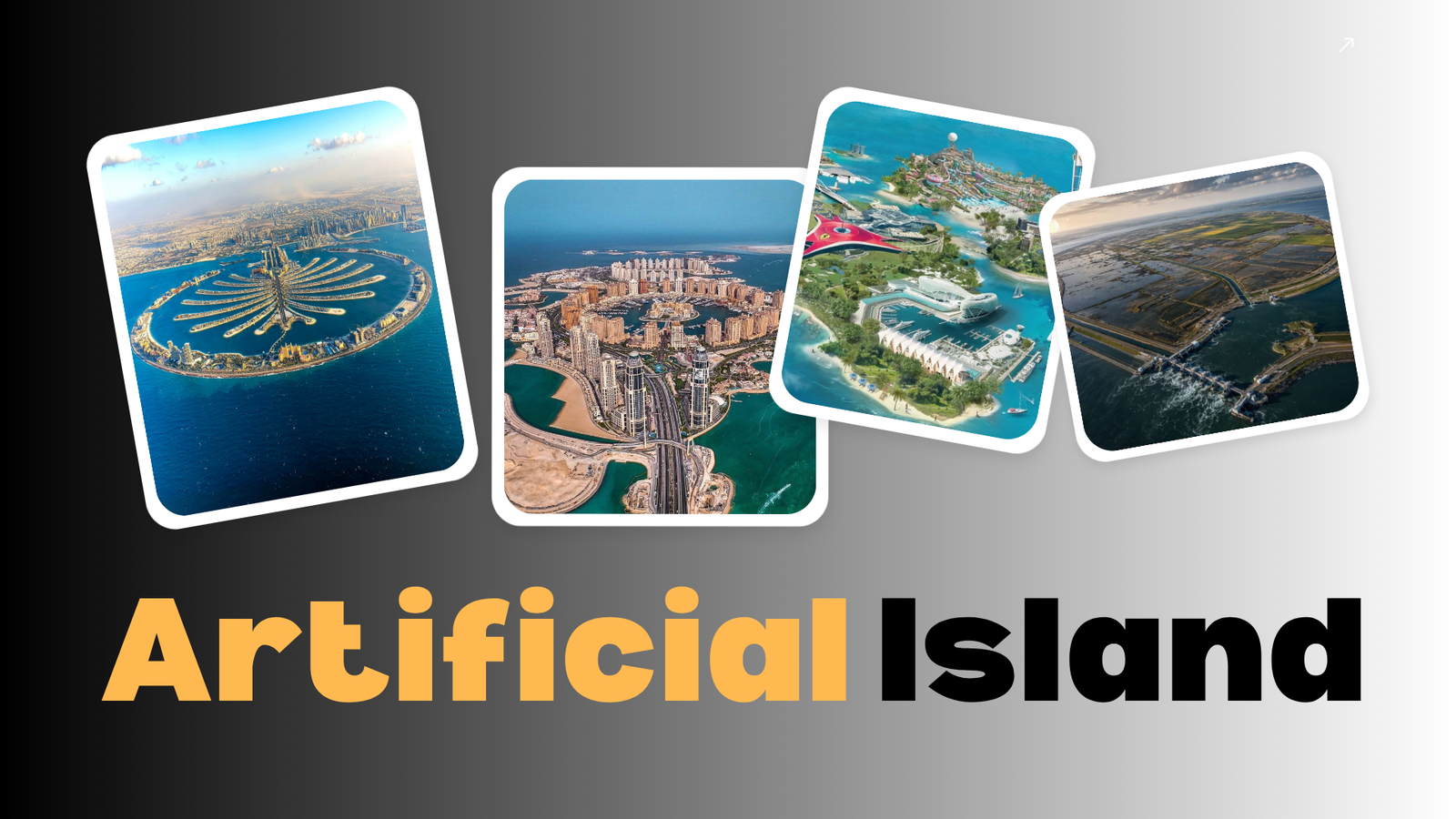
Discover the World’s Most Extraordinary Man-Made Islands
Imagine a coastline reshaped into a palm tree, an airport built on reclaimed land in the ocean, or an entire residential district created where the sea once existed. Artificial islands are turning ambitious engineering ideas into real places to live, work, travel and do business.
From the spectacular developments of Dubai to Japan’s offshore airports and the Netherlands’ vast reclaimed landscapes, these projects reveal how countries are creating new land to address urban growth, tourism, transportation and economic development.
But building an island is about more than adding land to a map. It also raises important questions about marine ecosystems, rising sea levels, construction costs and the long-term future of coastal cities.
What Are Artificial Islands?
Artificial islands are areas of land created or substantially expanded by human engineering rather than formed entirely through natural geological processes. They are commonly built by depositing sand, rock and soil in shallow coastal waters, reclaiming land from wetlands, or developing structures supported by foundations in the sea.
Their purposes vary considerably. Some are designed for luxury homes and resorts, while others support airports, shipping terminals, industrial facilities, public infrastructure and entire urban communities.
Unlike small floating platforms, most large artificial islands are permanent land-reclamation projects that require extensive coastal engineering, drainage systems, protective barriers and carefully planned infrastructure.
1. Palm Jumeirah, Dubai, U.A.E
Palm Jumeirah is one of the world’s most recognizable examples of modern artificial-island development. Built off Dubai’s coastline, it was designed in the shape of a palm tree, with a central trunk, branching fronds and an outer crescent-shaped breakwater.
Construction began in 2001, and the development has become an internationally recognized destination for luxury hotels, waterfront residences, restaurants and leisure experiences. Its distinctive shape can be seen clearly in aerial photographs.
The island demonstrates how land reclamation can support tourism and premium real estate while creating a new identity for a city. However, projects of this scale also require substantial investment in coastal protection, transportation, utilities and environmental management.
2. The Pearl Island, Doha, Qatar
The Pearl in Doha is a large artificial-island development combining residential neighborhoods, marinas, shopping areas, restaurants and waterfront promenades. Its design emphasizes coastal living and a carefully planned urban environment.
One of its best-known districts, Qanat Quartier, features colorful buildings, canals and pedestrian-friendly streets inspired by Venetian architecture. This design gives the development a distinctive identity within Qatar’s rapidly evolving capital.
The Pearl shows how reclaimed land can be used for more than tourism. It can also create integrated urban districts where housing, retail, leisure and hospitality operate together, although affordability, infrastructure demands and environmental impacts remain important considerations.
3. Port Island and Rokko Island, Kobe, Japan
Japan has developed several artificial islands to accommodate urban expansion, port activities, housing and commercial facilities. Port Island and Rokko Island in Kobe are notable examples of this approach.
Created through land reclamation, these developments combine residential areas, commercial buildings, transportation connections and port-related infrastructure. They demonstrate how offshore land can become an extension of a densely populated coastal city.
Their importance goes beyond architecture. Such projects can reorganize how a city uses its coastline, creating additional space for businesses and communities. At the same time, they require careful consideration of earthquake risks, soil stability, emergency access and disaster preparedness.
4. Flevopolder, Netherlands
The Netherlands offers a different perspective on artificial land. Flevopolder, created through extensive reclamation in the former Zuiderzee area, is widely recognized as the world’s largest artificial island by land area.
Unlike Dubai’s luxury developments or Japan’s offshore airports, Flevopolder is part of a much broader landscape of reclaimed land, including towns, agricultural fields, roads and water-management infrastructure.
Its creation reflects the Netherlands’ long history of managing water and expanding usable land through dikes, drainage and pumping systems.
Flevopolder shows that artificial land can support everyday life on a vast scale. It also demonstrates that the success of reclaimed landscapes depends on continuous water management, flood protection and adaptation to changing environmental conditions.
5. Yas Island, Abu Dhabi, United Arab Emirates
Yas Island is a major entertainment and leisure destination in Abu Dhabi, known for attractions such as Ferrari World Abu Dhabi, Yas Marina Circuit and large-scale hospitality developments.
The island illustrates how a purpose-built destination can bring several industries together. Motorsport, theme parks, hotels, shopping, events and residential development contribute to its role in Abu Dhabi’s tourism economy.
Rather than relying on beaches alone, Yas Island uses a mix of attractions to encourage longer visits and repeat tourism. Its broader lesson is that successful island development depends not only on engineering but also on a clear economic strategy and a diverse range of activities.
How Artificial Islands Are Built
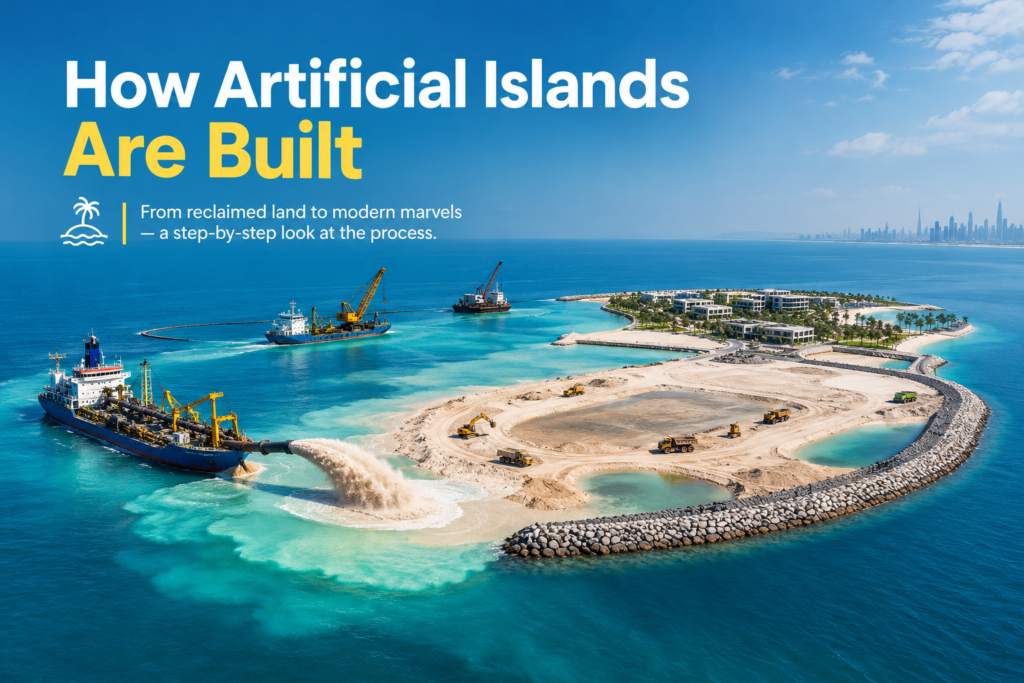
Creating an artificial island requires a coordinated process involving marine engineering, geology, environmental assessment and infrastructure planning.
Creating an artificial island begins with a detailed survey of the seabed, where engineers assess water depth, soil conditions, currents, wave action and geological hazards to determine whether the location is suitable for construction. Once the site is approved, sand, rock and other suitable materials are deposited using dredging and marine construction techniques to create the required land shape and elevation.
After the land is formed, engineers stabilize the island using protective barriers, ground improvement and drainage systems to manage waves, soil settlement and water movement. The final stage involves developing essential infrastructure, including roads, bridges, electricity, water supply and sewage systems, followed by the construction of buildings, public spaces and other facilities needed to make the island functional and sustainable.
The precise methods depend on the site. An airport island, a residential district and a large reclaimed agricultural landscape each require different engineering solutions and maintenance plans.
Economic Opportunities, Environmental Challenges and the Future
Artificial islands can create new economic opportunities, but their long-term value depends on how responsibly they are planned and managed.
Artificial islands can create significant economic opportunities by providing space for hotels, tourist attractions, residential communities, ports, airports and commercial districts. These developments can attract domestic and international investment, generate employment and improve regional connectivity. By combining tourism, business and infrastructure, artificial islands can contribute to economic growth and create new opportunities for surrounding cities and communities.
However, dredging and land reclamation can disturb marine habitats, increase sediment in the water and alter ocean currents or coastal erosion patterns. Rising sea levels, coastal flooding and extreme weather also create long-term challenges. To address these risks, future projects must prioritize resilient construction, effective drainage, protective barriers, renewable energy, efficient water use, sustainable public transport, habitat restoration and continuous environmental monitoring.
The next generation of artificial islands will be judged not simply by their size or visual appeal, but by their ability to remain economically useful, environmentally responsible and resilient over decades.
Conclusion: Engineering a New Relationship With the Sea
Artificial islands represent one of the most ambitious ways humans have reshaped the natural environment. From Palm Jumeirah’s distinctive design to Kansai International Airport’s engineering achievements and the Netherlands’ long tradition of land reclamation, these projects demonstrate the many purposes that created land can serve.
Their future, however, will depend on more than engineering capability. Financial viability, public benefit, environmental protection and climate adaptation must all be considered from the beginning.
As coastal cities continue to grow, artificial islands may remain an important development option in selected locations. The real measure of success will be whether they create lasting value without placing excessive pressure on the marine environments that surround them.