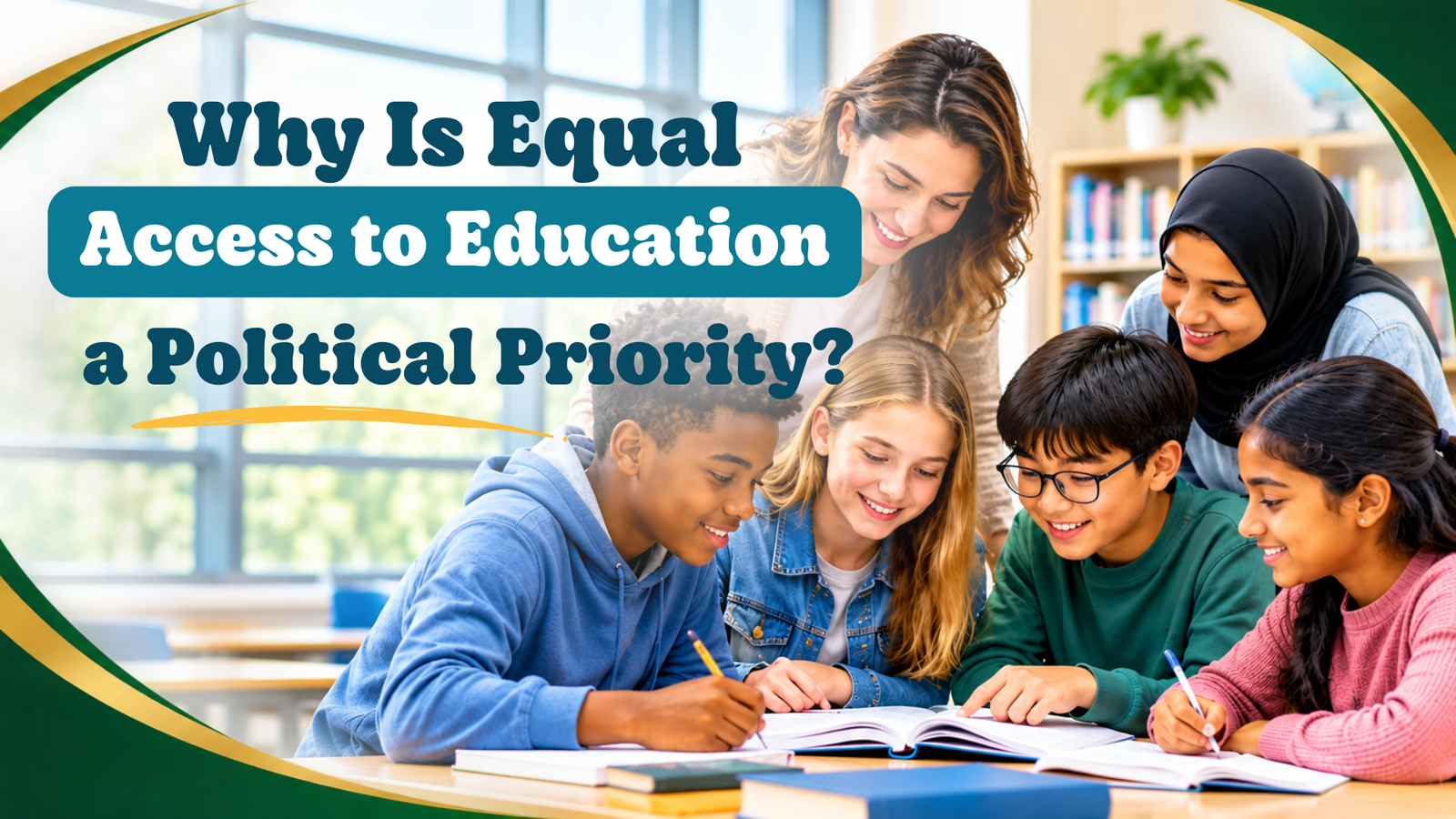
Equal education creates equal opportunities.
Education plays an important role in shaping individuals, communities and the future of society. It gives people the knowledge, skills and confidence needed to build better lives. However, not everyone has the same opportunity to receive a quality education. While some students have access to well-equipped schools, trained teachers and modern learning facilities, others face difficulties because of financial conditions, geographical barriers or social inequalities.
This difference has made equal access to education an important political issue around the world. Governments are increasingly recognising that education is not only a personal opportunity but also a public responsibility. Decisions about school funding, educational policies, teacher availability and digital learning can influence how fairly opportunities are distributed across society.
Education as a Foundation for Equal Opportunities
Education is one of the strongest ways to create equal opportunities in society. It allows individuals from different economic and social backgrounds to develop their abilities and work towards their personal goals. When children receive quality education regardless of their family income or circumstances, they have a better chance of building independent futures and participating in society.
However, unequal educational opportunities can continue across generations. Children from disadvantaged families may struggle with school expenses, limited learning resources or a lack of educational support. Political decisions can help address these challenges by making education more affordable, accessible and inclusive for everyone.
Government Policies Shape Educational Equality
Governments have an important responsibility in ensuring that educational opportunities are available to all students. Public funding, school infrastructure, teacher recruitment and national education policies all influence the quality of learning. Political leaders must decide how educational resources are distributed and which communities need additional support.
Investing in public schools, improving classroom facilities and supporting teachers can help reduce differences between well-developed and underserved areas. Governments can also introduce scholarships, financial assistance and free learning materials to reduce the economic pressure on families and ensure that more children can continue their education.
Financial and Digital Barriers to Education
The cost of education remains a major challenge for many families. Although public schooling is available in numerous countries, additional expenses such as uniforms, books, transportation, digital devices and examination fees can create difficulties. For households with limited financial resources, these costs may affect a child’s ability to continue studying. Financial assistance and affordable educational programmes can help reduce these barriers.
Technology has also transformed the way students learn through online classes, educational platforms and digital resources. However, not every household has reliable internet access, suitable devices or a comfortable place to study. Governments need to improve digital infrastructure, expand internet connectivity and provide affordable learning resources so that technological progress benefits students from different backgrounds.
Equal Education Supports Economic and Social Development
Access to quality education can influence the economic development of an entire country. Educated individuals are better positioned to develop professional skills, enter different industries and contribute to innovation. A stronger education system can also help businesses find skilled workers, improve productivity and support long-term economic growth.
Beyond employment, education plays an important role in building informed and active communities. It helps people understand social issues, evaluate information and participate in public discussions. When educational opportunities are distributed more fairly, societies can benefit from a wider range of talents, experiences and perspectives.
Inclusive Education Requires Political Commitment
Equal access to education involves more than opening schools or increasing the number of classrooms. It also requires attention to students who face additional barriers because of disabilities, language differences, gender inequality or difficult living conditions. An inclusive education system must recognise these challenges and provide suitable support so that every student has a genuine opportunity to learn.
Achieving this goal requires consistent political commitment rather than temporary programmes. Governments, educational institutions and local communities need to work together to improve teaching standards, strengthen school facilities and monitor educational inequalities. Regular evaluation of policies can help identify where progress is being made and where further improvements are necessary.
The Future of Education Depends on Equal Opportunities
The future of education will be shaped by the decisions governments make today. Population changes, technological developments and changing employment needs are creating new demands on education systems. Political leaders must ensure that these developments do not increase the gap between students who have access to resources and those who continue to face barriers.
Equal access to education is much more than a school-related issue. It is connected to economic opportunity, social fairness and the overall development of society. When governments make education accessible and inclusive, they invest not only in individual futures but also in stronger and more balanced communities. The real progress of an education system can be measured by whether every student has a fair chance to learn, grow and succeed.