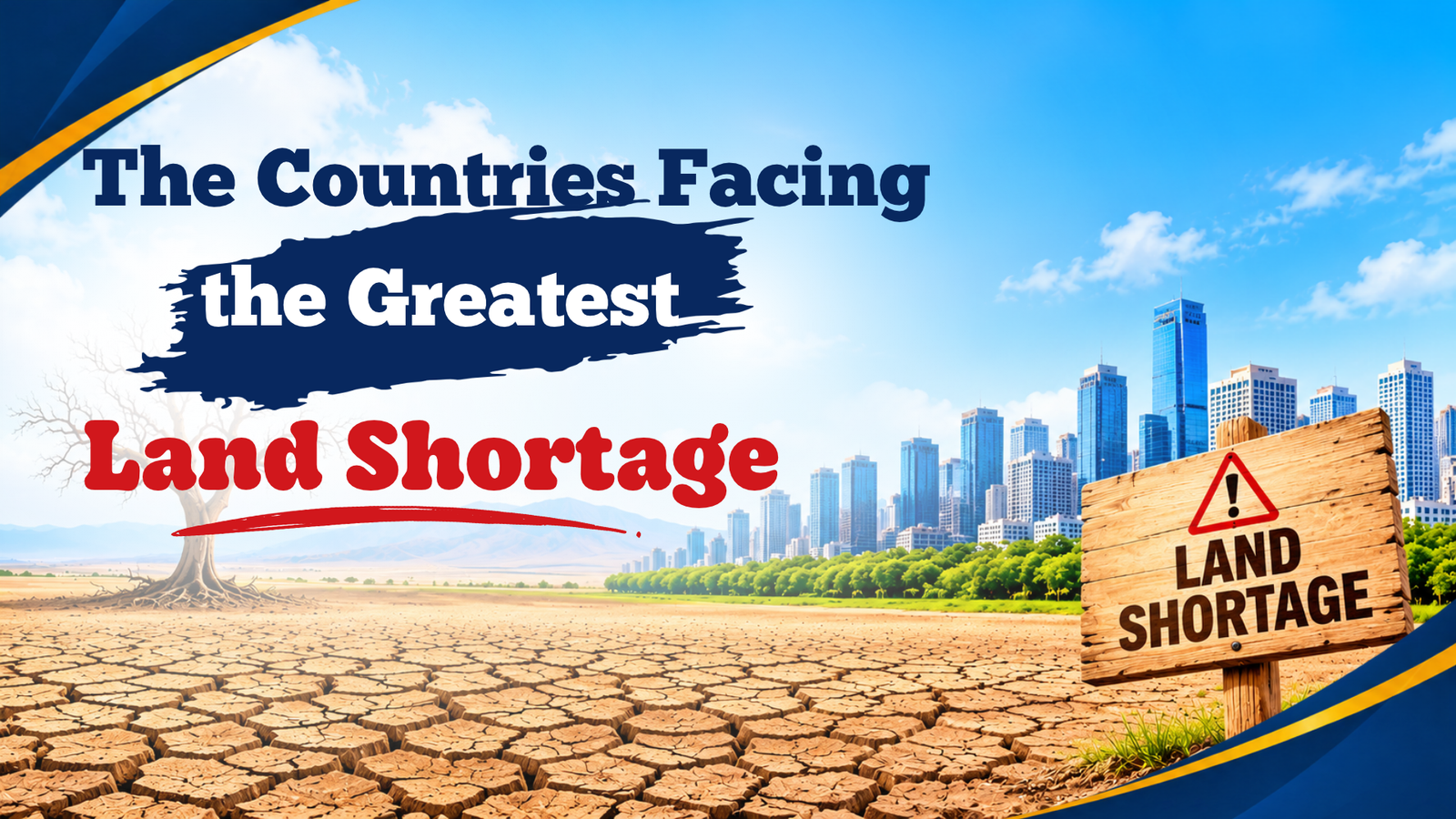
Land scarcity is reshaping the future of nations.
Land is one of the most valuable resources for every country. It provides space for homes, businesses, agriculture, transport networks and essential infrastructure. However, some nations face growing difficulties because their available land cannot easily support increasing populations and development needs.
Population growth, urban expansion and geographical limitations are making land management more challenging. From small island nations to densely populated countries, governments are finding new ways to use limited space while balancing economic growth and environmental protection.
Why Some Countries Are Running Out of Usable Land
Land shortages are becoming a growing concern as populations increase and cities expand. More people require housing, schools, hospitals and transport facilities, while businesses need space for offices, factories and commercial activities. This growing demand often puts pressure on agricultural land and natural areas.
Geography also influences how much land a country can use. Mountains, deserts, forests and coastal regions can limit construction and farming opportunities. As a result, even countries with considerable geographical areas may struggle to find enough suitable land for their growing needs.
Singapore and Hong Kong: Growing Population, Limited Space
Singapore is one of the clearest examples of a country facing limited land availability. Its small geographical area and growing economy create strong demand for residential buildings, commercial centres and infrastructure. To manage this challenge, the country has invested in high-rise construction, underground facilities and land reclamation to create additional space.
Hong Kong also faces serious land limitations because of its mountainous landscape and densely populated urban areas. Available flat land is limited, creating strong competition between housing, businesses and infrastructure. High-rise residential buildings, underground transport networks and carefully planned urban development help the city accommodate its growing needs.
The Netherlands and Maldives: Geography Creates Land Challenges
The Netherlands has developed innovative ways to manage its limited land resources. Much of the country lies at low elevations, and extensive water management systems help protect communities and agricultural areas. Land reclamation, dikes and canals have played an important role in development, while compact cities and modern farming techniques help make better use of available space.
The Maldives faces land shortages because it consists of numerous small islands spread across the Indian Ocean. Limited space creates difficulties for housing, tourism facilities and public infrastructure. Rising sea levels and coastal erosion add further pressure, encouraging the country to explore land reclamation and sustainable development solutions.
Japan and South Korea: Urban Growth and Limited Land
Japan faces land-related challenges because much of its territory consists of mountains and forested regions. This leaves a smaller proportion of land suitable for large-scale construction and agriculture. Major cities such as Tokyo and Osaka attract large populations and businesses, increasing demand for housing, transport and commercial facilities.
South Korea also experiences significant land pressure because of its mountainous geography and concentrated urban population. Seoul and other major cities require space for residential buildings, businesses and infrastructure. High-rise developments, underground facilities and efficient urban planning are helping the country manage its limited usable land.
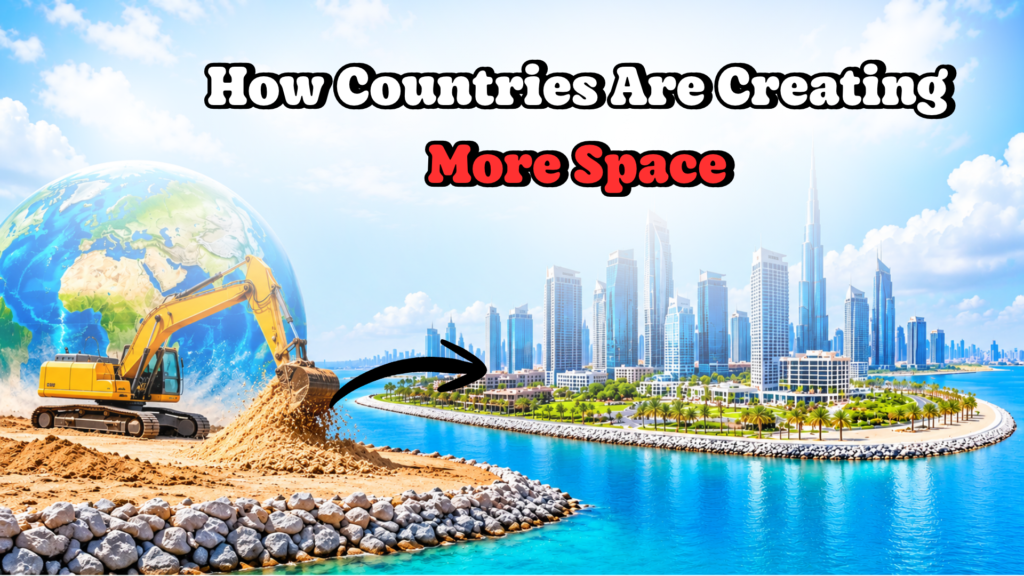
How Countries Are Creating More Space
Countries facing land shortages are increasingly exploring innovative ways to use existing areas more efficiently. High-rise buildings, underground transport systems and compact urban developments allow cities to accommodate more people without spreading across large areas. Land reclamation is another approach, particularly in coastal regions and island nations, where additional land can be created through carefully planned projects.
Technology is also helping countries improve agricultural productivity in smaller spaces. Vertical farming, hydroponics and controlled-environment agriculture offer new opportunities to grow food without depending entirely on traditional farmland. However, these solutions require investment and careful environmental planning to ensure long-term benefits.
The Future of Countries With Limited Land
Land shortages can influence housing costs, food production, business development and environmental protection. Increasing competition for available space may raise property prices, reduce green areas and place pressure on natural resources. This makes sustainable land management essential for countries that want to support economic growth without damaging their environment.
In the future, smart cities, vertical construction and advanced agricultural technologies may play a greater role in addressing these challenges. The experiences of Singapore, Hong Kong, the Netherlands, the Maldives, Japan and South Korea show that having limited land does not necessarily prevent development. What matters most is how effectively countries plan, protect and use the space available to them.