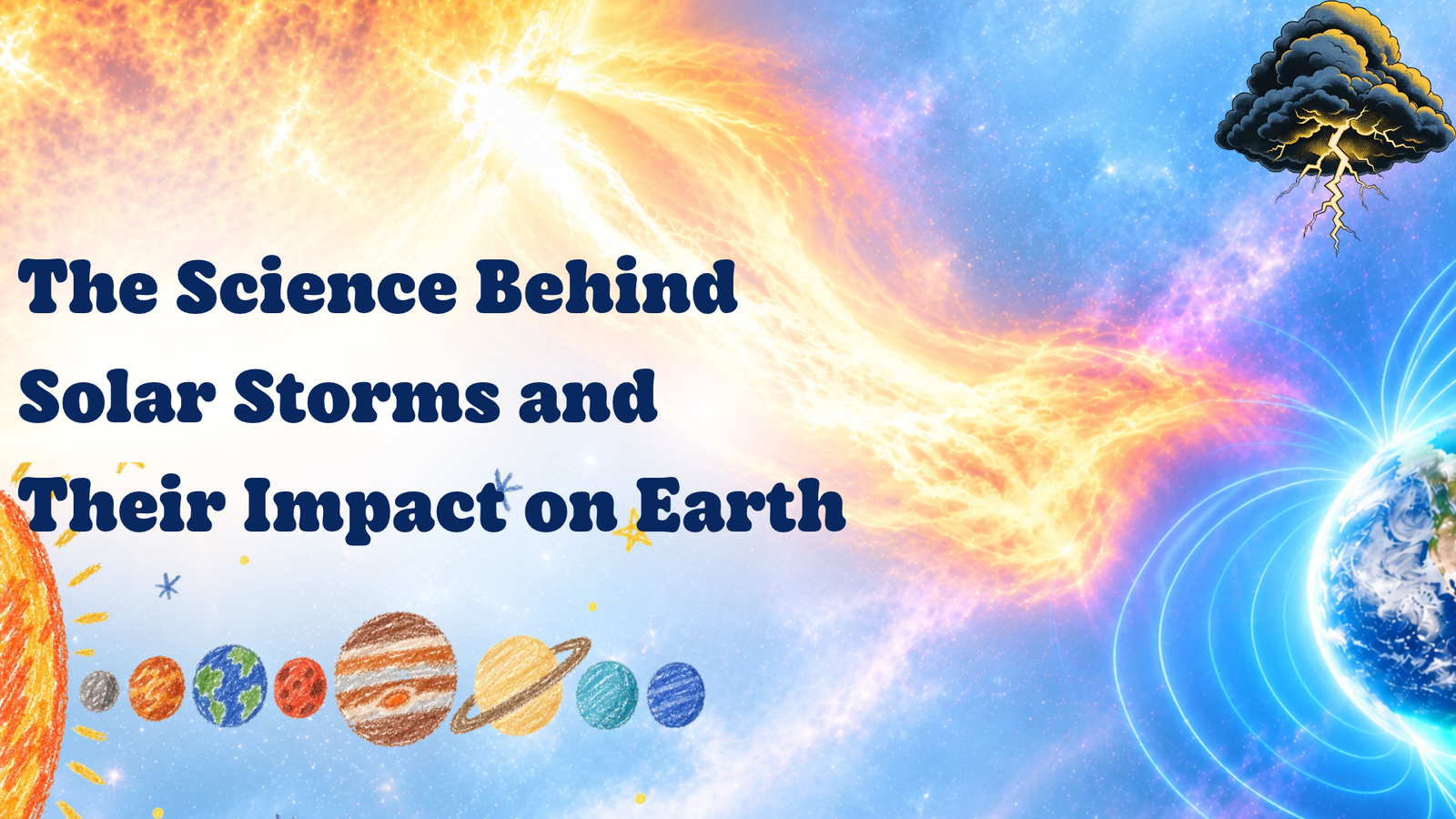
Solar storms can threaten Earth and its technology.
The Sun appears tranquil from the distance of millions of kilometres but the Sun’s surface is constantly changing. It is one of the most active objects in the solar system with powerful magnetic fields, intense bursts of energy and streams of charged particles. At times these activities cause solar storms which pass through space and interact with earth’s magnetic environment.
While most solar storms have little impact on Earth, some can interfere with electric power grids, navigation systems, communication systems and satellites. Knowledge of the development and effects on Earth of these storms is vital for enhancing space weather forecasts and for protecting space technologies, which are essential to modern society.
The Sun Is Actually More Active Than It Seems
The Sun isn’t just a big ball of glowing hot gas giving off light and heat. It has all the power with strong magnetic fields that are constantly moving, twisting and reorganising. The sunspot is one of the manifestations of these activities and can be seen as a dark spot on the sun’s surface. Such areas frequently have intricate magnetic field structures which may be able to drive strong solar eruptions.
The solar activity cycle is around 11 years with an increase and decrease of sunspots and frequency of many solar events. When the eruptions are more intense, they can occur more often. A study of these patterns helps scientists to understand the effect of solar changes on Earth’s space environment.
A Solar Storm Starts With the Sun
Solar storms can be created in various ways, one being solar flares and coronal mass ejections (CMEs). When a solar flare occurs, it emits a huge amount of energy, in the form of radiation, including ultraviolet light and X-rays. This radiation is shot at the speed of light, and can reach Earth in about 8 minutes, occasionally making radio communications on the sunlit side of Earth a bit chaotic.
CMEs throw out huge clouds of magnetised plasma from the Sun into space. The time it takes for these clouds to reach earth depends on their speed, and can be anywhere from about 15 hours to several days. When the CME’s magnetic field is sufficiently strong and when conditions are right on Earth’s magnetic field, it can cause a geomagnetic storm and cause noticeable space weather effects.
The Earth's Magnetic Field Has Saved the Planet!
The earth is encircled by a magnetic field, which forms a protective region about the earth, called the magnetosphere. This area shields a lot of the charged particles that are coming down from the Sun and it also helps to lessen the amount of direct interaction between the planet and the charged particles coming from the Sun. But such a natural protection isn’t foolproof, especially on high solar activity days.
If a CME arrives to Earth with the right magnetic signature, it can transfer energy into the magnetosphere, and disrupt the Earth’s magnetic environment. How strong the geomagnetic storm is will depend upon the velocity of the material entering the magnetosphere and the direction of the magnetic field. Such disturbances may occur in the upper atmosphere of the Earth as well as in the modern technological systems.
The Northern Lights Showcase Solar Storms' Elegance
The northern and southern lights (auroras) are one of the most interesting phenomena of solar storms. The colourful displays are due to the emission of light by the gases in Earth’s upper atmosphere in the presence of energetic particles. Green and red colours can be obtained from Oxygen and Blue and Purple from Nitrogen.
The Earth’s magnetic field funnels the charged particles towards the Earth’s atmosphere, enabling auroras to be seen near the Earth’s north and south poles. These displays can be more intense, and occur at lower latitudes during periods of strong geomagnetic storms. Auroras are a beautiful natural phenomenon, but they also aid scientists in their understanding of the Earth’s magnetic environment’s energy transfer.
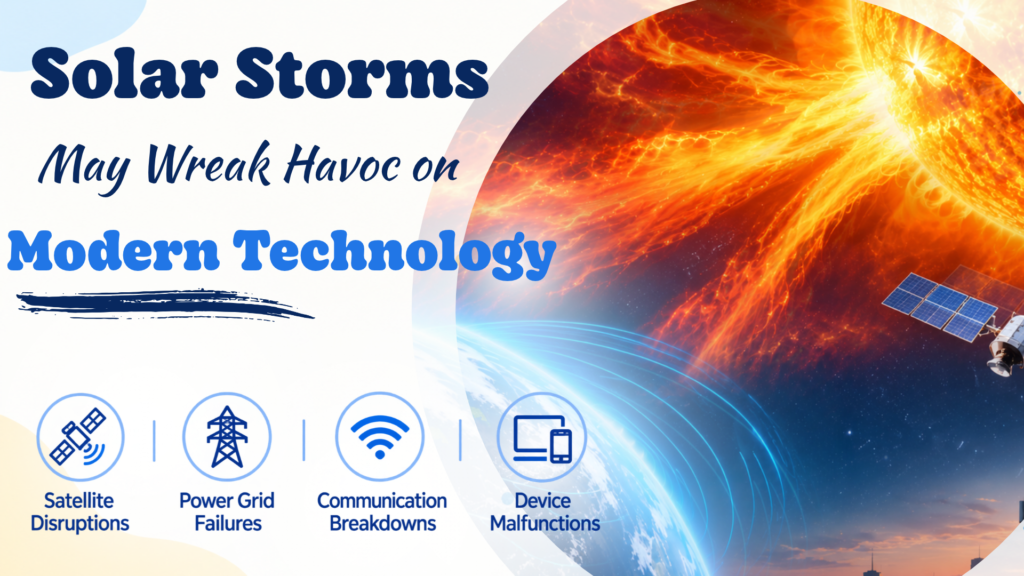
Solar Storms May Wreak Havoc on Modern Technology
Strong solar storms can pose problems for technologies which help people in their daily lives. The satellites may suffer from electronic disturbances and radio communications and/or satellite navigation signals may be affected by changes in the ionosphere. These impacts can be felt in systems applied in aviation, shipping and other industries which rely on precise positioning and reliable communication.
During the periods of severe geomagnetic storm, electricity networks can also be in danger. Sudden geomagnetic fluctuations can cause electric currents to flow in long electrical power lines, causing extra stress on power-grid equipment. The amount of disruption will vary according to the intensity of the storm and the readiness of infrastructure systems affected by the storm, and space weather monitoring is crucial for modern infrastructure.
Because the Phenomenon of Solar Storms Poses a Threat to the World
Observatories on the ground, satellites and computer simulations are used to observe and identify solar activity and disruptive events. We can use instruments between Earth and the Sun to detect incoming material from the Sun, and give advance warning of an incoming CME. The observations enable scientists to determine if a storm would affect Earth’s magnetic environment.
While it is still difficult to predict the impact of a solar storm, better monitoring will enable satellite operators, power-grid managers and aviation services to take steps to minimize the impact. There is a need to continue research and international collaboration in order to reinforce the early-warning systems and enhance the knowledge of space weather. Research into the Sun and its interaction with the Earth can advance understanding of the connection between Earth and the solar system, and help safeguard key technologies.