Exploring the universe begins with looking beyond the stars.
There are distant galaxies, planets and cosmic objects that remain unknown and are yet to be understood. While telescopes on Earth have enabled astronomers to make amazing discoveries, observing the universe from the ground comes with certain limitations. Earth’s atmosphere can distort incoming light, reduce image quality and prevent some wavelengths of radiation from reaching telescopes.
That’s why scientists are increasingly building telescopes in space. Advanced observatories located beyond Earth’s atmosphere can capture sharper images, enable the study of distant galaxies and help researchers investigate regions of the universe that are difficult to observe from the ground. These technologies are creating new opportunities to understand the formation and evolution of the universe.
Why Earth's Atmosphere Makes It Difficult to Observe Space
Earth’s atmosphere protects our planet, but it also creates challenges for astronomers. Light from distant stars and galaxies passes through different layers of air, where temperature changes and atmospheric movements can make celestial objects appear blurry. Even large ground-based telescopes sometimes struggle to observe faint or extremely distant objects clearly.
Another disadvantage is that Earth’s atmosphere absorbs certain types of radiation, including most ultraviolet radiation and X-rays coming from space. Space telescopes overcome many of these limitations by operating above the atmosphere, allowing scientists to collect information that would otherwise remain inaccessible.
How Space Telescopes Reveal the Universe Beyond Our Eyes
An important benefit of space telescopes is their ability to make detailed observations without atmospheric interference. This makes it easier for scientists to study distant stars, galaxies, nebulae and other cosmic objects. Modern observatories can also detect different wavelengths of light, revealing details that cannot be observed using conventional optical telescopes.
These advanced instruments enable astronomers to explore the early history of the cosmos. Light from distant galaxies may take billions of years to reach Earth, meaning that scientists can observe these galaxies as they existed in the distant past. Such discoveries provide valuable clues about how the first galaxies formed and how the universe evolved over time.
Exploring Other Planets and Searching for Signs of Life
Space telescopes also help scientists discover and investigate planets that orbit stars beyond our solar system, known as exoplanets. Although thousands of these distant worlds have already been identified, researchers are still working to understand their atmospheres, temperatures and environmental conditions.
Advanced observatories can study light passing through an exoplanet’s atmosphere when it moves in front of its host star. This technique helps scientists investigate the planet’s composition and identify certain atmospheric gases. These observations could eventually help astronomers discover planets with conditions that might be suitable for life.
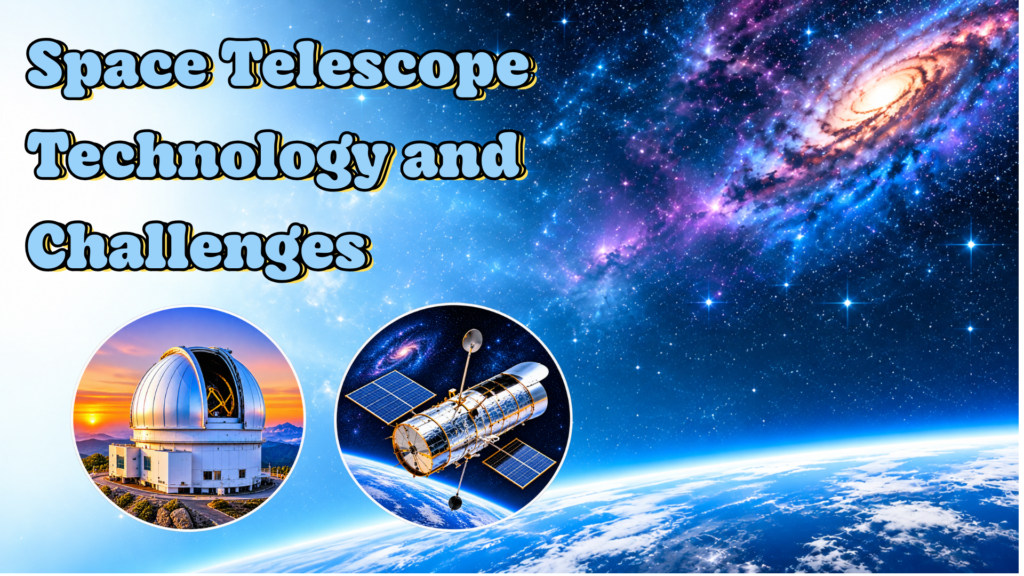
Advanced Technology and Challenges of Building Space Telescopes
Designing a space telescope is a challenging task that requires advanced engineering and careful planning. Each instrument must withstand the conditions of launch, operate in extremely hot and cold environments and function reliably in space, where physical repairs can be difficult. Modern observatories use advanced mirrors, sensitive detectors and specialised scientific instruments to collect accurate information from distant objects.
The development and launch of these telescopes also require considerable financial investment. Costs include research, manufacturing, testing, launch services and ongoing mission operations. Nevertheless, space agencies continue investing in new observatories because they offer scientific opportunities that are not always available through ground-based telescopes.
The Future of Space Telescopes and New Discoveries
With the advancement of modern astronomy, space telescopes are becoming increasingly important. New generations of instruments and improved observation techniques are giving scientists opportunities to investigate previously unexplored regions of the universe. These developments are helping researchers study distant galaxies, planetary atmospheres and mysterious cosmic phenomena in greater detail.
Future missions could provide more information about planets orbiting other stars and reveal additional clues about the earliest stages of the universe. As technology continues to advance, space telescopes will remain essential tools for answering fundamental questions about the cosmos and humanity’s place within it.